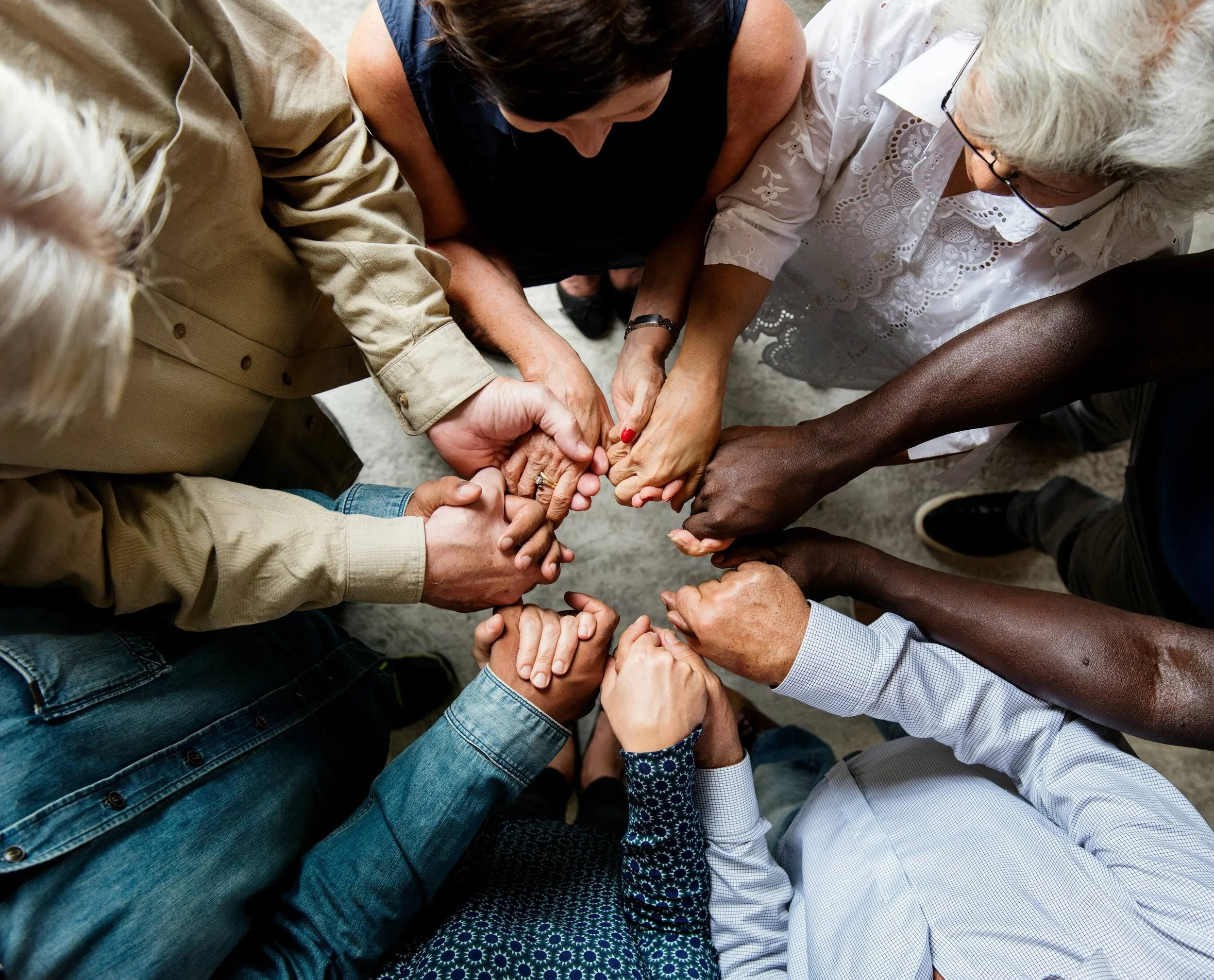
Group therapy designed for trauma survivors to get expert care, be part of a mutual community of support, and live more authentically in the present.
At Threshold Center for Trauma and Creative Arts Therapy one of our core values is that community and connection are an antidote to the isolation of traumatic stress.
Our therapy groups are how we put this value into action.

A trauma-focused group is a good fit if you…
-

Have done substantial work in individual therapy on your traumatic past, and are ready to engage in more interpersonal work that one-on-one therapy can provide
-

Feel you have a lot of insight on you were impacted by your traumatic past, but still find it challenging to put it into action in the present day
-

Want to feel more connected and emotionally authentic in how you relate to people in your daily, present life
-
Want to develop your sense of self-trust in relationships to others in your daily, present life
All Therapy Groups Are Held Virtually
Women’s Trauma Group
Meets every other Tuesday from 6:30 PM- 7:45 PM ET/5:30 PM-6: 45 CT
Dates are:
Oct 6, Oct 20, Nov 3, Nov 17, Dec 1, Dec 15, Jan 12, 2027, Jan 26, 2027 and Feb 9, 2027
Do you feel like your traumatic past keeps running your present life? Do you often feel stuck in survival mode? Do you feel disconnected and isolated from others?
Are you looking for support and connection in your ongoing trauma recovery work? Reach out today to join our virtual women’s group!
This group is open to anyone who identifies as a woman.
Frequently Asked Questions about Group Trauma Therapy
-
This group offers a supportive, intentional environment for women to rebuild their lives in the aftermath of trauma. Whether you are healing from childhood trauma, workplace stress or harm, assault, injury, or illness, you’ll deepen your recovery within the supportive group structure of shared experience and community.
Led by a trauma-centered psychotherapist, the group blends psychoeducation, interpersonal exploration, and creative arts therapy techniques to help you connect, grow, and discover new ways of living beyond survival.
This virtual group runs from October 2026 to February 2027, with meetings every other week.
-
This is group is interactive, and all group members are asked to participate actively in each session. That said, active participation can take many forms including encouraging another member, engaging in a creative process, or sharing a bit about what is coming up for you. One of the most pervasive effects of trauma is the impact on relationships, and so in this group, the relationship between members is intentionally developed and cultivated to create a space for connection, and interpersonal exploration.
-
As this group is focused on interpersonal awareness in relationship, the group is intentionally small. At maximum there will be 7 members of the group.
-
After the session February 9, 2027, you will have several options. You can either close your experience, or continue in the next cycle- which will begin again after a brief break in March of 2027. Some participants feel that one cycle of the group is sufficient for them, while others feel that being involved for multiple cycles supports their recovery and helps them continue the unique relationships they build in the group. Many participants choose to continue the group as they value the experience, the connection, and the mutual support they receive.
-
This is not a Zoom meeting- this is a Group Therapy session held on Zoom! While we will be online, it is very important to me that the group therapy sessions are engaging, creative, and enjoyable. Creative arts methods like journaling, metaphor, collaging, drawing, and storytelling will be integrated into each session. The box of creative materials will be used to help set you up for the activities that we will do together, and to help tie us all together by giving us a shared starting point.
-
The cost for each group will be $65, which is a reduction from the in-person cost since we don't have space or snacks. The cost does include the facilitation and design of the group, the HIPAA compliant meeting platform, as well as a boxes of creative materials that will mailed to you before the start of the group, as well as during the group.
-
Threshold Center is a self-pay practice, and does not accept insurance. Group therapy is highly effective in supporting trauma recovery. Unfortunately, insurance companies reimbursement rates don't reflect the effectiveness of group therapy, and offer low rates that make it hard for clinicians to run effective groups. Running an effective trauma therapy group involves various costs for the clinician including research and planning time, professional consultation, and as well as time outside of the group session to coordinate and check-in with the group participants. As it is important to me that this is an effective, quality trauma therapy group, the self-pay structure ensures that the group has the resources it needs to run well.

When you have experienced traumatic events in your life, your experience with relationships with other people can feel:
Overwhelming, as you don’t know who is safe or not
Dissatisfying, as you don’t feel seen or understood
Performative, as you feel you need to hide the pain or details of what you experienced to fit in
Anxiety-inducing, as you want to connect, but worry if you will be accepted
Like too much work, as so many parts of you are on overdrive when you interact with other people
Not something you deserve or can manage, as it feels easier to move away from others then it does to engage with them

All of this makes sense.
Traumatic harm happens in relationships, so it makes sense that relationships don’t feel safe.
You are trying to protect yourself from more harm. That protection however, has two sides to it. Yes, it keeps you safe. And the flipside is that it prevents you from connecting with others. It prevents you from experiencing relationships and communities that can disprove what you learned from your previous experiences of relationships.
It keeps you in the same place you are in now.

The harm that happened in the past is playing out in your relationships, the way to recover from this is to enter into relationships.
That is where group therapy comes in.
In group therapy, you engage with various different kinds of relationships with other participants, and this becomes a rich space of learning, experimentation, exploration, and also reclamation of the experience of what a relationship can be.

If you are ready for a new experience with relationships, our therapy groups are designed to help you navigate this experience.
Groups provide a trauma-focused space that allow you to process this past in the presence of others, and then move to building a sense of trust and community in the present.

The Connection to Persephone

Trauma has a way of feeling no one else has ever known the weight of the particular season you find yourself in.
Every person in a trauma group can relate to the feeling of an indefinite winter. Group therapy helps because your season, however isolating it feels, turns out to be a season others can recognize and relate to. Being seen in that, rather than needing to explain your experience, brings a new perspective on how you relate to yourself, others, and the world.